Free, in-browser Chinese reading analysis
HanziCoverage
Paste any Chinese text. See how much of it you can already read, and exactly which words to learn next.
HanziCoverage estimates your word-recognition coverage at each HSK level, both the 2.0 six-level and the 3.0 nine-level schemes, and ranks the words you are missing by how common they are. Your text is analyzed entirely on your device and is never uploaded. We are not affiliated with HSK, Hanban, or Chinese Testing International, and coverage is a word-recognition estimate, not a comprehension guarantee.
Quick answer
What does HanziCoverage actually do?
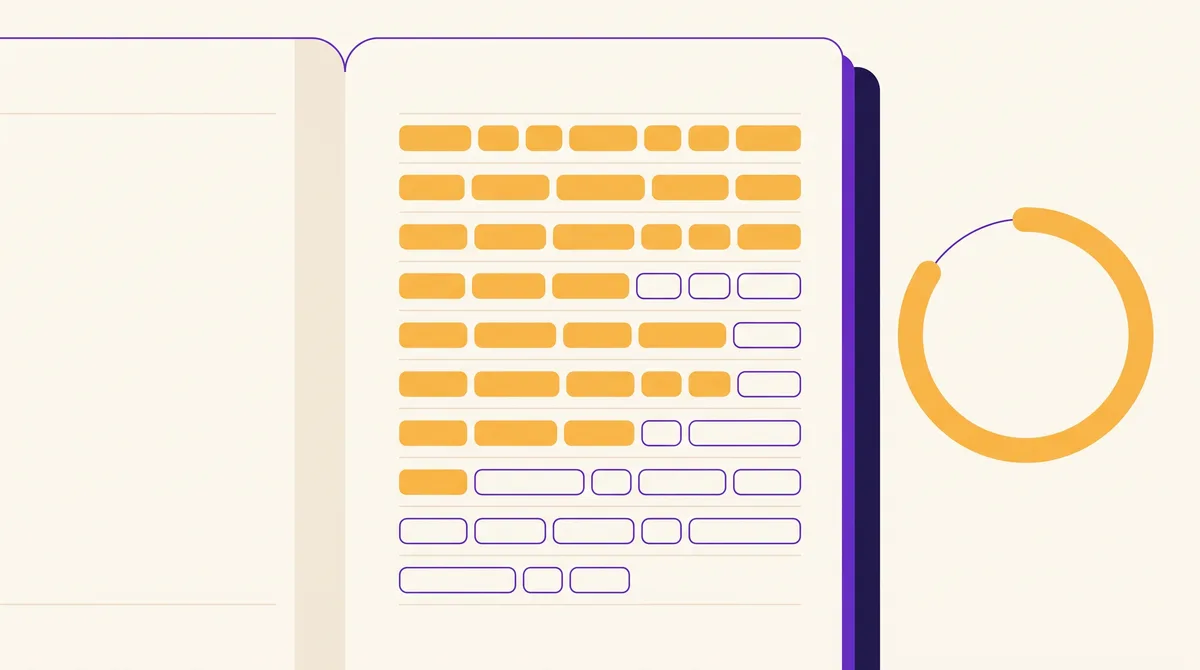
HanziCoverage measures how many of the words in a Chinese text you already know, at each HSK level on both the 2.0 six-level and 3.0 nine-level schemes, and lists the unknown words worth learning first, ranked by how often they show up. Paste a text, pick a level, and get a coverage percentage plus a gap list, entirely in your browser.
Three free tools, no account, no upload
Text coverage analyzer
Paste any Simplified or Traditional Chinese and see roughly how much you can already read at each HSK level, plus your highest-value unknown words sorted by frequency.
Difficulty grader
For teachers and tutors: paste a candidate text and get the HSK level at which a reader reaches comfortable coverage, and a plain-language difficulty band.
Cross-genre coverage matrix
How many words do you actually need? Drag N and watch the same top-N Chinese words reach a different share of subtitles, news, Wikipedia, novels, and classical texts, for both HSK schemes.
How the coverage estimate works
- Paste your text. Simplified or Traditional Chinese, any length from a sentence to a whole chapter. Nothing you paste leaves your device.
- Pick an HSK level. The analyzer checks your text against that level's word list on both the current HSK 3.0 scheme and the older HSK 2.0 scheme, since many learners still study one or the other.
- Read your coverage and your gap list. You get a percentage of known running words plus the unknown words sorted by frequency, so you can see whether the text is a comfortable read and exactly what to learn next.
Comfortable extensive reading is commonly cited at roughly 95 percent known-word coverage, and comfortable independent reading without constant dictionary help at roughly 98 percent. Coverage is a word-recognition estimate, not a comprehension guarantee: grammar and idiom sit outside what a word list can measure.
Who uses HanziCoverage
- Self-studying learners deciding whether a novel, news article, or graded reader is within reach right now, before committing hours to it.
- Teachers and tutors grading candidate texts for a class or a single student with the difficulty grader instead of guessing from a publisher's stated level.
- Graded-reader shoppers comparing series on the graded readers pages against their own measured coverage rather than a marketing label.
- Anyone curious how far a study level actually reaches into real writing: the cross-genre matrix shows the same vocabulary landing very differently in subtitles, news, novels, and classical text.
Common questions
Does HanziCoverage upload the text I paste?
No. Segmentation, classification, and coverage math all run in your browser over data bundled with the page, so your pasted text is never uploaded or transmitted. We receive only anonymous aggregate statistics, such as a coarse text-length band and a coverage band, never the text itself and no accounts or identifiers.
How accurate is the coverage estimate?
It is a close estimate, not an exact count. Automatic segmentation mis-splits names and words outside the dictionary, and coverage assumes you know every word up to your chosen level. Use it to compare texts and plan study, not as a precise reading score.
What coverage do I need to read Chinese comfortably?
Reading research commonly cites roughly 95 percent known-word coverage for comfortable extensive reading and roughly 98 percent for comfortable independent reading without constant dictionary help. Below about 90 percent, a text is usually a hard slog. These are guideline figures from the reading literature, not exact thresholds, and coverage is not the same as full comprehension.
Does the analyzer work with Traditional characters?
Yes. You can paste Simplified or Traditional Chinese, or a mix. The dictionary maps common Traditional forms back to their Simplified entry before matching, so coverage and the gap list work either way. Traditional variants that share a Simplified word are treated as the same word.